Güneş & Güneş Law Firm
Since 1999 Our Institutional History
Our legal journey, which began in Kemer and has reached from Antalya across Türkiye and into international cooperation.
The milestones that have shaped our professional expertise, our shared working culture and our institutional structure.
Güneş & Güneş Law Firm was founded in Kemer on March 18, 1999 by attorney Umut Güneş, and moved its headquarters to Antalya in 2007. Over the more than 27 years since our founding, we have developed our legal knowledge, our team structure, our technological infrastructure and our international professional relationships together. We have turned practical experience into institutional memory and professional knowledge into a shared working culture.
As legislation changes, case law evolves and client needs diversify, we have renewed our working methods while keeping our core approach: examining every legal matter from every angle, building a strategy specific to the case, following the engagement diligently through to its final stage, and keeping the client regularly informed.
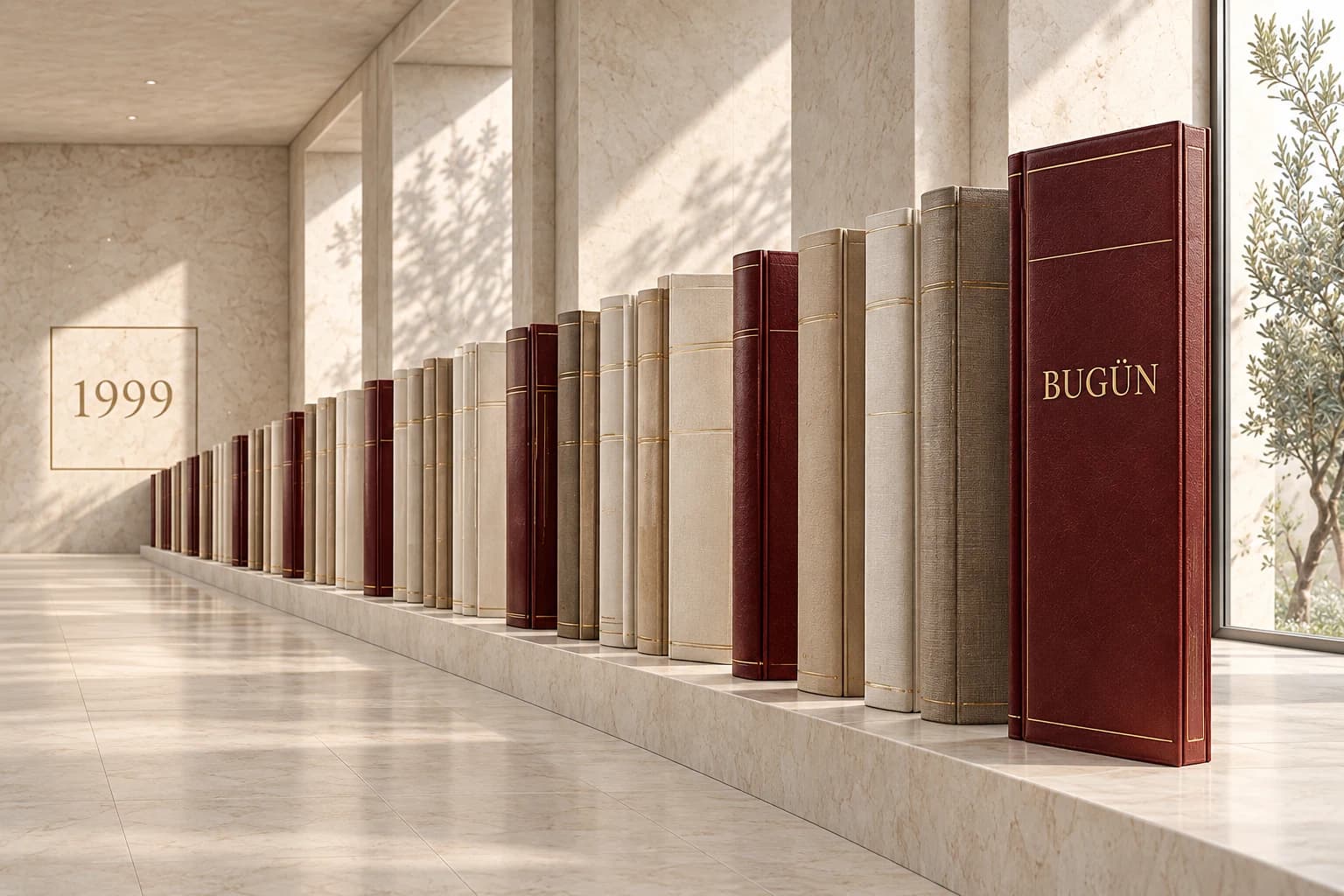
- Founded
- March 18, 1999 · Kemer
- Founding attorney
- Attorney Umut Güneş
- Current headquarters
- Antalya · since 2007
March 18, 1999 — Founded in Kemer
The foundations of how we work today
We laid the foundations of Güneş & Güneş Law Firm in Kemer on the principles of professional independence, integrity, diligence, confidentiality and responsibility.
The working approach of our founder, attorney Umut Güneş, rested on combining legal knowledge with practical experience, examining every case together with its facts and documents, and assessing the available legal courses of action on concrete grounds. Research, preparation, the development of legal strategy and the follow-up of its implementation were the complementary stages of this approach.
Keeping the client informed, clearly and understandably, about the stages of the case, important developments, the legal options and the matters that call for a decision has been part of our working culture since the first day.
Our founder’s analytical method of reviewing cases, his work discipline and his approach to client communication have, over time, shaped the firm’s team structure, its training culture and its institutional operations.

2000–2009 — Shared Working Culture and Digital Infrastructure
Turning knowledge into a shared working resource
In the early 2000s, we upgraded our computer and operating system infrastructure and moved to a shared server system. This structure, in which everyone in the office could draw on the same pool of information and documents, brought filing, access to information and sharing within the team together on one digital infrastructure. It allowed us to carry out our legal work in a more orderly and coordinated way.
During the same period, we began using digital legislation and case-law databases. We complemented printed legal sources with electronic research tools. Easier access to legislation and court decisions improved our research, our legal assessments and our drafting of pleadings and contracts.
Using researched information in a file, sharing it with colleagues and being able to reuse it in later matters was an important step in the development of our institutional memory. The approaches followed in files, the legal reasoning and the knowledge gained in practice became a shared body of expertise that can be passed on and built upon.
The administrative and technical structure that supports legal work
Within the firm, we established our IT and accounting units. We organized the operation of our technological infrastructure and our administrative and financial affairs within defined duties and responsibilities. These investments were concrete steps in our approach of supporting our legal expertise with technical infrastructure, orderly records and planned operations.
The work we carry out across different areas of law showed that individual disputes and the legal needs of companies call for different methods of preparation and follow-up. We gave filing, deadline tracking, legal research, the drafting of pleadings and contracts, hearing preparation and client updates a more systematic structure through the division of tasks and supervision by the responsible attorney.
2006 — Launching our first website
We launched our first website in 2006. By adopting the internet early as part of institutional communication, we brought the firm’s identity and its approach to legal services into the digital environment.
We have developed our online presence, which began at that time, in step with changing communication needs and technological possibilities. This path, from our first website to today’s multilingual information and communication structure, has become one of the lasting elements of our institutional development.
2007 — Moving our headquarters to Antalya
In 2007, we moved our headquarters from Kemer to Antalya. From that date, our legal journey that began in Kemer has continued based in Antalya.
2010–2019 — Written Processes, Professional Training and International Relations
Bringing institutional operations to written standards
In the 2010s, we turned the infrastructure built in the previous period into a more comprehensive institutional operation. We put the firm’s work, transactions and processes into writing in an institutional working handbook. We created a shared point of reference for the division of duties, responsibilities and working methods.
Written processes made it easier to preserve the knowledge gained within the firm, to pass it on to new colleagues and to apply it consistently in daily operations. We developed the programs we prepared for each practice area, and our departmental structure, together with shared working standards.
We extended digitalization, covering legal research, file and document management, task tracking and communication within the team, across the firm’s operations as a whole. While integrating our IT infrastructure with the needs of different units, we treated preparation, implementation, recording, review and improvement as a shared responsibility for quality.
A clear division of tasks and supervision by the responsible attorney
Defining duties clearly, being able to monitor the work done and conducting every legal matter under the supervision of the responsible attorney became the foundation of our institutional working order. Orderly records, written processes and knowledge sharing within the team strengthened the clear assumption of professional responsibility and the review of work.
We built the practice adopted at our founding, regular client updates, into our written operations. We organized explanations about the status of the file, important developments, required documents and stages that call for a decision as a complementary element of legal work.
A practical internship program and the transfer of knowledge
We put in place, as an institutional program, a dedicated, practice-based internship program for trainee attorneys. Trainees began to take part in active training and practical work in the firm’s different units.
We structured the program so that, alongside legal research, file review, preparing pleadings and hearings and managing deadlines, it enables trainees to learn how the different practice areas operate and to understand how tasks relate to one another.
Professional ethics, confidentiality, responsibility, client communication and work discipline formed the core elements of practical training. We placed importance on passing on legal knowledge through day-to-day work and on young lawyers developing with a sense of responsibility.
Evaluating interrelated areas of law together
Cross-border transactions, the changing needs of companies and files touching on more than one area of law developed our multidisciplinary approach. An investment together with its contracts, a corporate transaction with tax and employment law, and a dispute with documents and parties in different countries each called for a broader review.
Commercial, corporate, tax, employment, administrative, real estate and foreigners’ law and similar interrelated areas, we assessed together within the needs and strategy of the same file.
Services in four languages and international professional relationships
Services and communication in four languages
Services and communication in Turkish, English, German and Russian, covering all of our attorney and legal consultancy services, became an important element of our institutional working order.
We have made it our principle to explain legal concepts, required documents, the stages of a transaction, application and filing deadlines, the courses of action available and the risks in a language the client understands. This approach strengthened communication between legal work carried out in Türkiye and our clients who are abroad.
International legal networks and professional cooperation
In the 2010s and the years that followed, we became a member of a number of international legal networks. Through these memberships, we gained access to professional contacts and cooperation opportunities reaching more than one hundred countries. The experience we gained broadened our international perspective and developed our approach to institutional legal services and our vision for the future.
The professional relationships we built in these networks gave us concrete cooperation practice in information sharing and file-level coordination with law firms and attorneys in other countries. This expertise strengthened the service we provide in cross-border matters connected to Türkiye and our approach to cross-border legal processes.
2020 to Today — Institutional Identity and Technology
Developing legal, administrative and financial processes together
In the 2020s, we developed our IT and technology infrastructure so that it supports the firm’s legal, administrative and financial functions together. We integrated the written processes, division of tasks and digital working methods built in earlier periods with our institutional identity, our approach to service and our daily operations.
Electronic notification and court systems, digital research sources, online meetings, secure document sharing and document management improved our ability to plan, together, transactions carried out from different cities.
We treated access to file information, task tracking within the team and remote communication as parts of one complementary working order. Information sharing between departments and carrying out processes together strengthened team coordination, record keeping, deadline tracking and client communication in the same direction.
While making use of digital tools, we have kept source verification, confidentiality and attorney supervision as our core standards. We keep at the center of our working approach the responsibility to verify the accuracy of information and to make a legal assessment suited to the specific file.
2022 — Registration of Our Institutional Trademark
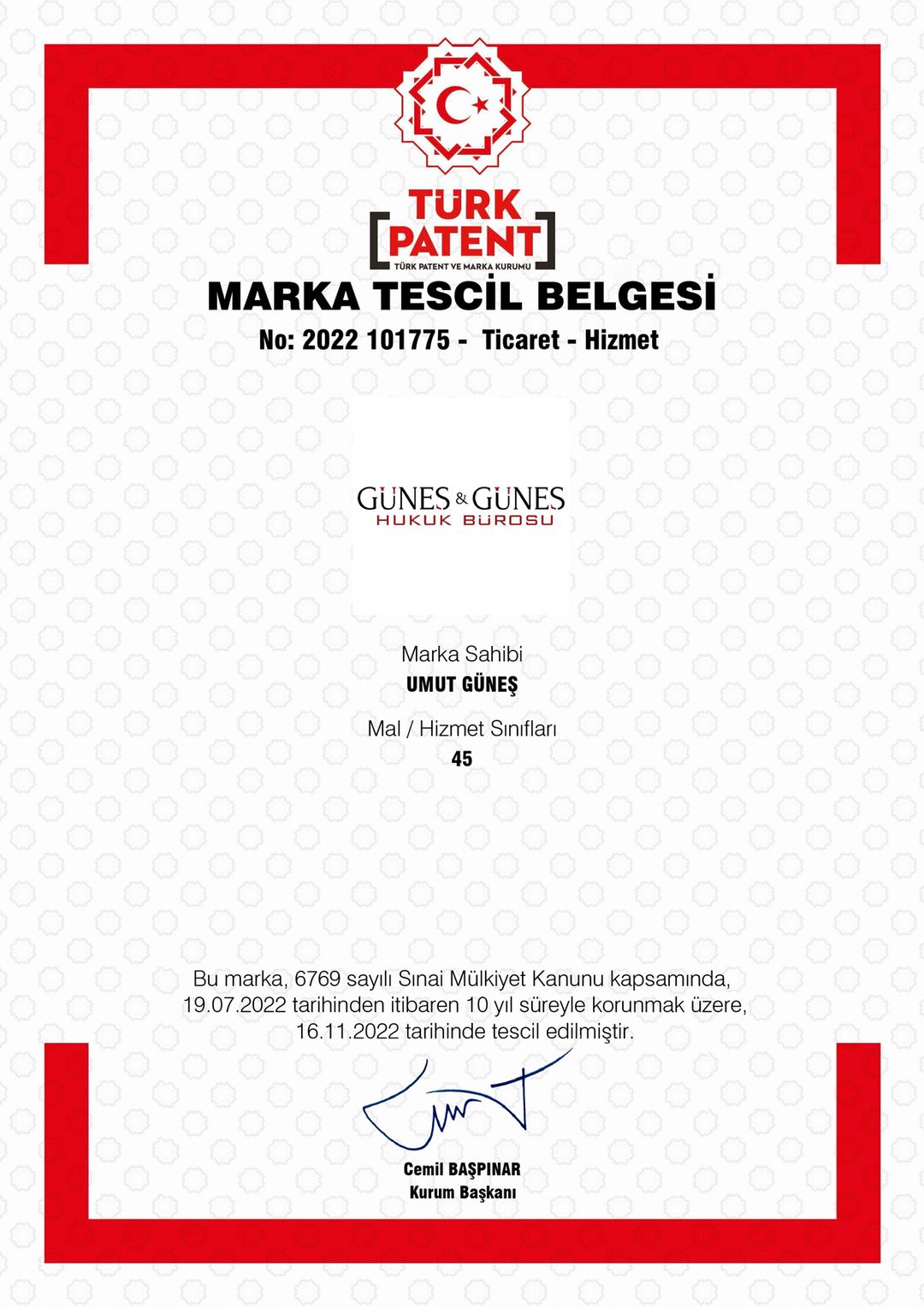
The Güneş & Güneş Law Firm trademark was registered with the Turkish Patent and Trademark Office on November 16, 2022. This registration is one of the important steps in the history of the institutional identity we have developed since 1999.
- Registration number
- 2022 101775
- Trademark owner
- Umut Güneş
- Class of goods / services
- 45
- Protection start date
Today — Services Across Türkiye and Coordination in Other Countries
An approach that researches and assesses anew in every file
With every new file, we assess the experience we have built since 1999 together with current legislation, court decisions and the circumstances of the specific case. We examine every legal matter anew in light of its facts, parties, documents, deadlines and objectives.
We see the value of experience today in asking the right questions, weighing legal options, building a workable strategy and following the process through to its final stage, including enforcement after a decision.
We address the client’s needs, the legal and factual circumstances of the file, foreseeable risks and the courses of action available together. We carry out legal work and keeping the client informed as complementary parts of the same process.
Legal services in all 81 provinces of Türkiye and their districts
Our Antalya-based firm provides litigation, contract and legal consultancy services in all 81 provinces of Türkiye and their districts.
We plan our work before courts, enforcement offices, administrative authorities, notary offices, land registry and trade registry offices from our Antalya headquarters. We assess hearings, site inspections, document collection and on-site procedural needs file by file, and where necessary we cooperate with colleagues in the relevant location. We determine how the work is carried out according to its legal nature and the requirements of on-site procedures.
Matters connected to Türkiye and legal coordination in other countries
We provide attorney and legal consultancy services in cross-border matters connected to Türkiye, and we carry out file-level coordination on our clients’ behalf in legal processes in other countries.
This coordination covers identifying a suitable partner law firm or attorney, discussing the legal matter on the client’s behalf, assessing the scope of services and the engagement stage, ensuring the flow of documents, planning the process, following developments and keeping the client regularly informed.
Local legal representation and procedural steps in the country concerned are carried out by an independent attorney authorized in that country. Within the scope of the coordination it undertakes, our firm follows communication and the process on the client’s behalf.
We provide services in Turkish, English, German and Russian across all of our attorney and legal consultancy services. From your first inquiry through the follow-up of the legal process, you can communicate with our firm in the language you prefer. This working order supports both our clients abroad with their legal matters in Türkiye and the international coordination we carry out from Türkiye.
AI-assisted tools and attorney supervision
We make use of digital tools and AI-assisted applications in legal research, review of information and documents, drafting, and the improvement of work processes.
We use these tools as aids that support the attorney’s legal judgment. We put AI outputs through source checks and review by the responsible attorney, and we safeguard professional secrecy and the protection of personal data. The final legal assessment and professional responsibility rest with the attorney.
We develop our written working methods, cooperation between departments and our technological infrastructure in line with changing needs. Professional training, technology and sharing of knowledge within the firm together strengthen the continuity of our service and our institutional work discipline.
The institutional strength of knowledge
Our Law Library and Continuing Professional Training
Our law library is one of the main pillars of our institutional body of knowledge. We draw on academic sources, legal commentary and practice-oriented publications in our work on files. These sources add depth to our research, the formation of legal opinions, and the drafting of pleadings, defenses and contracts.
Our library is a shared learning resource where our attorneys and trainee attorneys can research, compare different views and develop their professional knowledge. We use printed legal sources together with digital legislation and case-law resources to examine legal matters from different angles.
By drawing on legal education networks and professional training opportunities, we keep up with changing legal approaches and developments in practice. By sharing what we learn in team reviews, file meetings and training sessions, we turn individual learning into institutional knowledge.
The firm’s library, digital research sources, legal education networks and practice-based internship program are complementary elements of a working culture that researches, shares its knowledge and continues to develop professionally.
Together toward the future
Institutional Memory and the Future
Preserving, sharing and carrying our expertise into the future
We have regarded the development of the attorneys, trainee attorneys and other team members who have served at our firm since its founding as an important part of our institutional continuity. Together with legal knowledge and practical experience, we have taken care to pass on work discipline, professional ethics, a sense of responsibility, cooperation within the team and an approach to client communication.
We preserve the expertise that grew out of our founder’s professional approach through shared working methods, and we develop it with the contributions of new generations. Our approach to the future is to preserve our institutional memory, to work on the basis of verifiable information, to support the development of our whole team, and to make the legal service we provide to clients clearer, more orderly, more secure, more accessible and more open to oversight.
Law continues to evolve, and we continue to learn, to research and to develop our working methods. We continue the journey that began in Kemer on March 18, 1999 from our Antalya headquarters, as a law firm that upholds its professional principles, shares its knowledge, uses technology responsibly and prepares diligently for every new legal matter.